A Plum By Any Other Name

  • Stories
  • About
  • Recipes
  • Images

Peychaud’s Fallen Chocolate Soufflé Cake, Cheers to Bitters

March 25, 2013 by Emily Gelsomin in Dessert

I organized an East versus West Coast IPA tasting on Saturday night.  Please note, the picture below does not show you the destruction that follows when four people consume 160 ounces of high-octane brew in a single-blind tasting.

We tasted.

  • Peak Organic Brewing Company’s IPA, Portland, ME (7.1% ABV)
  • Somerville Brewing Company’s Slumbrew Flagraiser IPA, Ipswich, MA (7.5% ABV)
  • Brewmaster Jack’s Ambrewsia Imperial IPA, Holyoke, MA (7.7% ABV)
  • 21st Amendment Brewery’s Brew Free! Or Die IPA, San Francisco, CA (7.0% ABV)
  • Sierra Nevada Brewing Co.’s Torpedo Extra IPA, Chico, CA (7.2% ABV)
  • Bear Republic Brewing Company’s Racer 5 IPA, Healdsburg, CA (7% ABV)
  • Sixpoint Brewery’s Bengali Tiger IPA, Brooklyn, NY (6.4% ABV)

We commented.

  • “Smells like Heineken; tastes dirty.”
  • “I want to like it, but it has an odd finish—like dishwater.”
  • “A good IPA for winter—a woodsman’s beer.”
  • “Smells like my gym bag.” “Fruity, but a bit like B.O.”
  • “Tastes like clean plants, like you watered the lawn and then drank it.”
  • “Caramel smell; almost brown butter-like; like a financier.”
  • “I want to drink this on a boat.”
  • “Blek.”

We ate.

An entire loaf of bread studded with chunky flecks of fleur de sel intended to balance the sweetish bitter brews. 

A few narrow strips of rye focaccia I had squirreled away for such an occasion, with a version of Yotam Ottolenghi’s hummus, spiked with cumin.

Plus slices of fallen soufflé cake.  Also known as the cake to end all chocolate cakes. 

Lest you think this cake praise was swayed by consuming my weight in high-powered IPAs, I also had it for breakfast the next morning.  It was good, if not better, in its following days.

Its inspiration came from a beautiful photo in Gather mashed with a riff on the late Richard Sax’s chocolate cloud cake in bon appétit's most recent edition.  It is a rich, yet light cake with an almost cheesecake quality.  I ruffled it up with a little bitters.  Though you cannot specifically pinpoint the Peychaud’s, its subtle anise and nutmeg notes add warmth to the cake. 

The decision to dust or not to dust with powdered sugar is yours, and yours alone to make, though I think I prefer the look without it.  What you cannot forgo is the sprinkling of sugar on top, which adds an additive crunch and a hint of sweetness to an otherwise mildly sweetened cake. The powdered sugar had dissolved into the cake the following morning, letting the glints of crystallized sugar shimmer through again. 

Which was how I preferred it in the first place. Either way, it is a winner.

Peychaud’s Fallen Chocolate Soufflé Cake

Inspired by bon appétit and Gather Journal

Ingredients:

  • ½ cup (1 stick) butter, cut into 1-inch pieces (plus more for the pan)
  • ¾ cup plus 2 tbsp sugar, divided (plus more for the pan) 
  • 10 ounces 60-80% dark chocolate, roughly chopped
  • 2 tbsp canola oil
  • 6 eggs, divided
  • 2 tbsp unsweetened cocoa powder
  • 3 tbsp Peychaud’s bitters
  • 1 tsp vanilla extract
  • ¾ tsp kosher salt
  • powdered sugar (optional)

Instructions:

Set the oven at 350 degrees.  Butter a 9-inch springform pan and dust with (the granulated) sugar; tap lightly to remove any excess.  

In a large heatproof bowl set over simmering water, combine the butter, dark chocolate, and oil.  Stir until the chocolate and butter melts.  (You can take the bowl off the simmering water before everything has fully melted; it will continue to melt from the residual heat.)

Meanwhile, separate 4 of the eggs.  Place the whites in a stand mixer and the yolks in a medium bowl.  To the yolks, add the cocoa powder, bitters, vanilla, salt, ¼ cup of sugar, and the 2 remaining eggs.  Whisk until smooth.

Once the chocolate butter mixture has fully melted (be sure it’s well combined), gradually whisk in the yolk mixture.

Beat the egg whites on high until frothy and then gradually add in ½ cup sugar, with the mixer still running. Beat until firm peaks form.  Gently fold the whites into the chocolate in 2 additions, until the mixture is just incorporated.

Pour the batter into the prepared springform pan.  Smooth the top and sprinkle with the remaining 2 tbsp of sugar.  Bake for 35 to 45 minutes, until the cake is puffed, starting to crack, and the edges start to pull away from the sides of the pan.  

Let cool fully in the pan on a wire rack before releasing it.  The cake will collapse slightly and continue to crack and pull away from the sides of the pan as it cools.  

Dust with powdered sugar, if desired.

Makes enough for 8 humans

Notes:

  1. This cake is flourless, which could be perfect for the start of Passover.  
  2. Keep any leftovers in an airtight container.  Mine was gone after 2 days, but definitely kept wonderfully in the interim.  (Also, I used a mixture of Taza bars that probably averaged out to 70% dark.)
  3. Bon Appétit serves this cake with a mascarpone whipped cream scooped into the center, which I am sure would be splendid.
  4. The winners of the blind tasting were Peak Organic and 21st Amendment.  Slumbrew did very well too.  
March 25, 2013 /Emily Gelsomin
chocolate, cake, bitters
Dessert

Blackberry Lemon Verbena Cheesecake and Americana

July 09, 2012 by Emily Gelsomin in Dessert

If I could rewind, I would not have flipped the latch on my springform pan causing cheesecake liquid to ooze slowly, unstoppably out. Like molasses, equally as messy, and just as painful to watch.  

If you are one of those people who chirps about reframing things, you might call this a teachable moment.  I am not that together most of the time.  

I stood just staring at the puddle of cheesecake on my floor for a few minutes. On a Tuesday at roughly 9 PM, a good deal of wasted dairy threatened to take me down.

After I cleaned bits of eggy cream cheese from my cabinet doors, floor, and the crevice between my stove and sink, and collected myself, I got to work on round two.  Cheesecake: 1  Emily: 0

I intended to make dessert for a fourth of July party and it would have been simply un-American to show up cheesecakeless.  We are fighters.  We love Rocky Balboa.  We wear tiny cutoff shorts with the pockets showing.  We eat cheese in all forms. And so I went back to the grocery store, and reloaded.

This is not a cheesecake for weaklings.  There seems to be a good deal of praise devoted to cheesecakes that are "light" and "airy." This is all fine and good and could probably be considered progressive. I do not want a cheesecake like this. I want one that is thick and luscious.  One that will knock me out with her American thighs.  And this cheesecake is all of those things.

A sliver is all you need to feel satisfied.  The cake is classic and I love it for sentimental reasons.  

The base recipe comes from my Great Aunt Rose.  It won me over as a favorite dessert at family holiday gatherings a few years ago. And when I asked her for the recipe she said, “It’s good.  But it’s a pain in the ass.”  And then forked it over. 

It is actually not too terribly difficult to make, but you do have to pay attention to it. And if you open your springform pan prematurely you may find yourself swearing like a sailor.

I added the blackberries because I wanted something to cut through its richness.  And though I am not usually a fan of their big, brutish drupelets, the container I picked up and sniffed smelled slightly of cassis and this was enough to change my mind.  So with a newly found vision of cold cheesecake topped with a crown of glossy blackberries, I came back swinging.

And this time, it was a knockout. Because it ain’t how hard you hit. It is about how many dropped cheesecakes you can take, and keep baking.

Blackberry Lemon Verbena Cheesecake

Adapted from Aunt Rose

Ingredients:

for the crust

  • 1 cup all-purpose flour, sifted
  • ¼ cup sugar
  • zest of one lemon
  • pinch of salt
  • pinch of ground ginger
  • pinch of ground coriander
  • ½ cup butter
  • 1 egg yolk
  • a generous ½ tsp vanilla extract

for the filling

  • 40 ounces cream cheese (5 packages), softened to room temperature
  • a generous ½ tsp vanilla extract
  • zest of one lemon
  • 1¾ cup sugar
  • 3 tbsp all purpose flour
  • ¼ tsp salt
  • 4 to 5 eggs (1 liquid cup full), at room temperature
  • 2 egg yolks, at room temperature
  • ¼ cup heavy cream
  • splash of orange blossom water (optional)

for the blackberry topping

  • 25 ounces of blackberries (or roughly 3 to 4 cups), divided
  • 2 tbsp lemon juice 
  • about ⅓ cup of sugar (depending on the sweetness of the berries)
  • pinch of salt
  • 2 tbsp Crème de Cassis
  • 3 sprigs of lemon verbena (optional)

Instructions:

for the cheesecake

Set the oven to 400 degrees.

In a medium bowl, combine the first six ingredients for the crust and then cut in the butter until the mixture is crumbly.  Add in the vanilla and egg yolk. Mix until the mixture is fully moist. (It may help to do this with your hands.) 

Place a little more than a third of the mixture into the bottom of a  9-inch springform pan and bake until golden brown, about 8 to 10 minutes.  Let cool.  (If it's hot in your kitchen you may want to put the rest of the mixture into the fridge while the bottom bakes.)

When the bottom crust has cooled, lock in the sides of the springform pan. Butter the sides, and press the rest of the crust mixture from the bottom up the sides, up to about one inch in height. (Not all of the cheesecake will be covered with crust.)

To make the filling, beat the softened cream cheese until creamy and velvety smooth in a stand mixer.  Add the vanilla and lemon zest and then add the sugar, flour, and salt gradually while the mixer is running on low speed.  Then add the eggs one at a time, while the mixer is still running.

Fold in the heavy cream and orange blossom water. Pour the mixture into your springform pan (it will nearly fill the pan so don't be alarmed).

Bake at 450 degrees for 10 to 15 minutes (my instructions say 12) and then turn the oven down to 300 degrees and bake for 55 minutes more.  Place on a wire rack to cool. 

After 30 minutes, gently loosen the sides of the pan with a knife.  After 1 hour, remove the sides of the springform pan.  Allow to cool two hours longer before placing in the fridge to chill.

for the blackberry topping

Line the top of your cheesecake with a layer of fresh berries. You can stagger and stack them a bit to create some height, but a slightly haphazard little pile is all you need. 

Place a few handfuls of the berries into a saucepan.  Add in the lemon juice, sugar, and salt and cook on medium heat until the berries start to burst and let their sauces out and then add the Crème de Cassis.

Cook until the mixture starts to thicken.  It should look thick and glossy, but still be spreadable (this will take about 10 to 15 minutes).  Add a little more lemon juice to the pan to thin out the sauce, as needed. 

Once at the desired consistency, drop in your lemon verbena sprigs and take off the heat to cool slightly, about 5 to 10 minutes. Strain out the seeds; reserve for another use or discard.

With a pastry brush, gently brush the strained blackberry syrup-glaze over the top of the berries. 

Serve immediately or refrigerate until ready to serve.

Makes one cheesecake (for about 12 to 16 humans) 

Notes:

  1. I love lemon verbena in the summer. It is a good counterpart for the blackberries and a natural here, playing off the lemon zest and ginger and coriander in the crust. 
  2. You can spread the strained, sweetened seeds on toast.
  3. More about Crème de Cassis here. 
     
July 09, 2012 /Emily Gelsomin
blackberry, cake, cheesecake
Dessert

Breton Fleur de Sel Buckwheat Cake, Sun in the Sky

March 01, 2012 by Emily Gelsomin in With Whole Grain, Dessert


I have accepted this time of year tends to be a bit bland for my taste.  The grayness that lurks in the crevice of February and March usually forces me into hibernation.  During this time I keep to myself, and try to keep out of trouble.  This year I failed, miserably. 

The two-day affair I had with an unforgiving frozen yogurt recipe is one I would rather forget.  An encounter with a slab of pork belly shot me straight out of a dead sleep, our earlier romance lingered violently on the cold bathroom floor for the next few hours. In a last-ditch effort, I looked for solace in a lackluster bouillabaisse, wasting saffron and drinking too much wine in the process.

Of course none of this helped.  I just felt puffy.  I stopped interacting with others. Bright lights became irritating.  I growled at people showing signs of affection.  I began to wonder if maybe I had Asperger’s. 

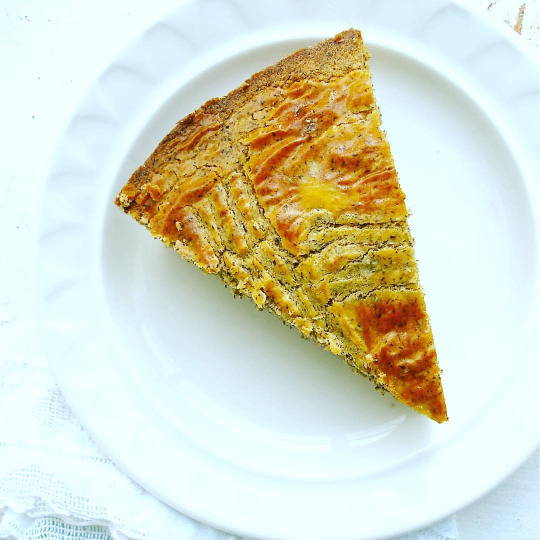
But then I made this cake. It was a quiet Sunday afternoon.  As the sugar and butter fluffed up, I started to breath again.  Once the smell of cinnamon and dark rum crept through my apartment, I stopped grinding my teeth. 

When I took the cake from the oven, its glossy, yellow crosshatched pattern smiled at me with a cakey gap-toothed grin.  For the first time in quite a long while, I did not feel compelled to scoff. 

I heard Nina Simone’s “Feeling Good” start up in my head.  Fish in the sea, you know how I feel.  Blossom on the tree, you know how I feel.  Everyday cake lovers, you know how I feel.

This is a rich cake that uses nutty buckwheat to its advantage, playing off the butter and rum.  The fleur de sel melds these flavors, supports them, and serves as a salty backbone for the cake. 

It is a simple cake.  A very pretty cake.  A special cake that looks and tastes far better than its ingredients would lead you to believe. 

And so I am leaving my hole.  Winter recluses, you know how I feel.  The end bits of February never seem very pleasant.  Not that this cake is a cure-all, but it is certainly a welcoming recipe. A worthy end of winter companion.  Amazing what a little butter and buckwheat can do.

It’s a new dawn.  A new day.  And a new cake.  And I’m feeling good.

Breton Fleur de Sel Buckwheat Cake

Adapted from Diary of a Locavore

Ingredients:

for the cake

  • 1 cup buckwheat flour
  • 1 cup all purpose flour
  • a scant ¾ tsp fleur de sel, plus a few extra grains to sprinkle on top of the cake
  • ¼ tsp cinnamon
  • ½ pound (2 sticks) unsalted butter, softened
  • 1 cup light muscovado sugar
  • 4 large egg yolks
  • 1 large egg
  • 1 tsp vanilla extract
  • 2 tbsp dark rum

for the glaze

  • 1 large egg yolk
  • 1 tsp milk

Instructions:

Set your oven to 350 degrees.  Grease a 9-inch pie pan with butter. 

In a small bowl, sift the flours, ¾ tsp salt, and cinnamon.  Combine the butter and sugar in the bowl of a stand mixer and beat until the mixture is light and fluffy. 

While the mixer is on low speed, add the egg yolks one at a time and finally the whole egg. Then add the vanilla and rum.  Mix in the dry ingredients, a third of the flour mixture at a time.  Stir the mixture with a rubber spatula until it just comes together and the flour is no longer visible.

Pour the batter into your prepared pie pan (it will be thick).  Use your spatula to smooth it over.

Whisk the egg yolk and milk together for the glaze.  Brush it generously on top of the cake and then, using the tines of a fork, rake three parallel lines across the cake in one direction and three parallel lines in the other direction. 

For a picture of this, see here. 

Sprinkle the cake with just a little bit more of fleur de sel, a pinch or so; use your judgment.  Bake the cake for about 25 to 30 minutes, or until the top is golden brown and a toothpick or cake tester comes out clean when inserted into it. 

Let cool slightly on a wire rack.

Makes enough for 6 to 8 humans

Notes:

  1. Be careful not to overbake this cake.  It can dry out if you do.
  2. This recipe was originally attributed to David Lebovitz. It comes from his book The Sweet Life in Paris. Which does not surprise me in the least. (The cake also freezes brilliantly.)
  3. I used muscovado because the time called for something fancy. Light brown sugar can be substituted.
March 01, 2012 /Emily Gelsomin
cake, buckwheat
With Whole Grain, Dessert
  • Newer
  • Older

Copyright 2024